

Co-creating community initiatives to improve public health
What’s CAIR?
CAIR (pronounced / ker / ) it’s the acronysm for Cocreating Actions to Improve Rationality in the Health System, a research project led by the Miguel Hernández University of Elche and funded by the European Union through an ERC Consolidator Grant (No. 101125843).
Objective
The project aims to stimulate changes in the functioning of the health system by demonstrating how the co-creation of communication initiatives can alleviate the burden on primary care services, reduce medicalisation and increase health equity.
Co-creation
Co-creation is a collaborative process that brings together different stakeholders to design, implement and evaluate interventions aimed at improving people’s health. This approach includes the participation of diverse actors, such as authorities, health professionals, community organizations and citizens, working together to identify problems, develop solutions and implement them in a participatory manner.
Context
Despite the well-known impact of social, economic and environmental factors on our health, health actions continue to focus on individual solutions (medication, patient counselling, vaccination, etc.). CAIR seeks to demonstrate how community initiatives can lead to a more rational and equitable approach to health care and ultimately improve people’s health.
Location
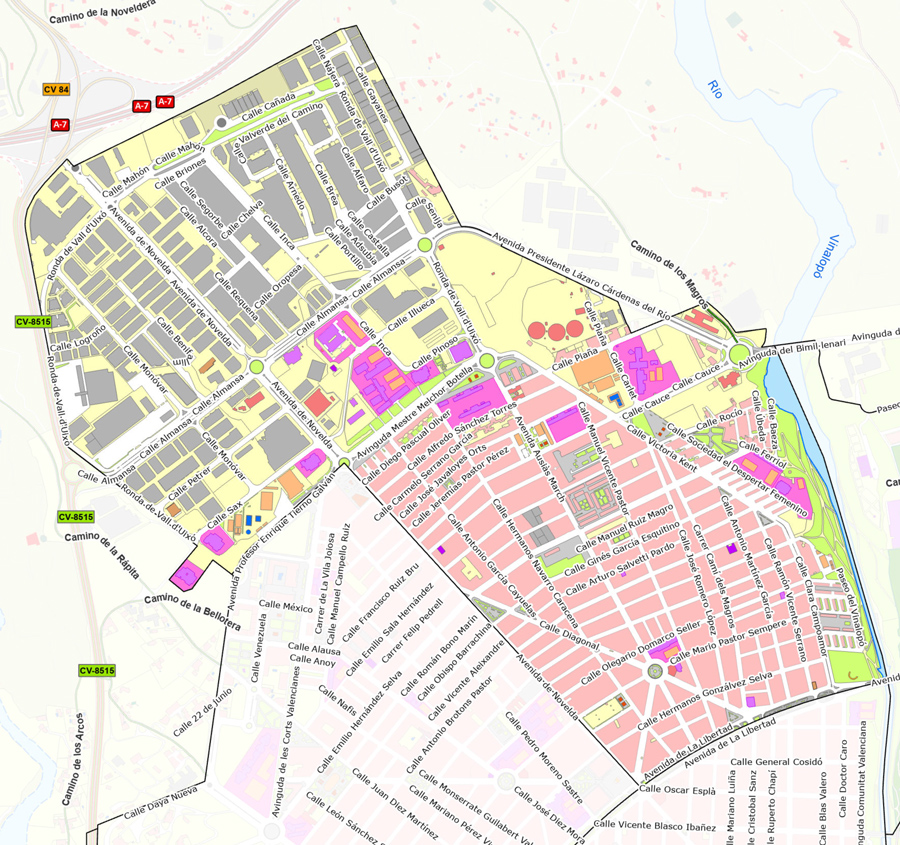
The reearch will focus on Carrús neighborhood and its surroundings (Elche, Alicante), with a population of approximately 36,000 people.
Map
Research areas
The chosen areas are among the most important population health priorities today, so the methodology used could be highly effective in bringing about sustainable change.
Methodology
Our scientific approach combines quantitative research, such as population-based surveys, comparison of pharmacological data and aggregated indicators of health services and primary care consultations, with qualitative methods that explore stakeholder perceptions. Moreover, we will conduct community-based participatory research to involve citizen scientists in the co-creation of actions, the impact of which will be analysed by comparing indicators before and after their implementation, as well as qualitative analysis.