
Every September 29, we celebrate World Heart Day, the perfect initiative to reflect on how we look after our cardiovascular health. This year’s theme is: “Move for Your Heart.”
Through the CAIR Project, we want to join this call to action by sharing some of the most significant findings from the first phase of our research, in which cardiovascular health is one of the three main areas of study.
What do we know about cardiovascular risk? Results from the pharmacy questionnaire
To assess the community’s knowledge level , we administered a questionnaire containing 24 key questions about cardiovascular risk factors. We defined “adequate knowledge” as answering at least 75% of the questions correctly.
The results reveal a significant challenge for the community:
- 95.27% of participants demonstrated insufficient knowledge. This figure remained very similar across all age groups and genders.
- Income-based gap: Paradoxically, individuals with a family income of less than €1,000/month showed a higher level of knowledge (5.97%) compared to those earning more than €1,000/month (2.90%).
- Migrant population: Migrants showed significantly lower levels of knowledge compared to the local population.
Migrant population: Migrants showed significantly lower levels of knowledge compared to the local population.
There are behaviors and activities we can adopt to promote cardiovascular health. However, we know that getting started isn’t always easy. During our research, we identified 18 different barriers that hinder the adoption of non-pharmacological measures (such as exercising or improving one’s diet). The 5 most frequently reported issues by the community were:
- Personal health status (34.64%): the perception that current pain prevents physical activity.
- Family responsibilities (17.69%): lack of time due to caring for family members or the home.
- Price or financial cost (12.04%): perceived barriers related to fees or paid activities.
- Excessive work (9.34%): long or exhausting work schedules.
- Lack of guidance (6.14%): not knowing which professional or organization to turn to for advice.
From data to the streets: A heart-healthy walking meeting in Carrús
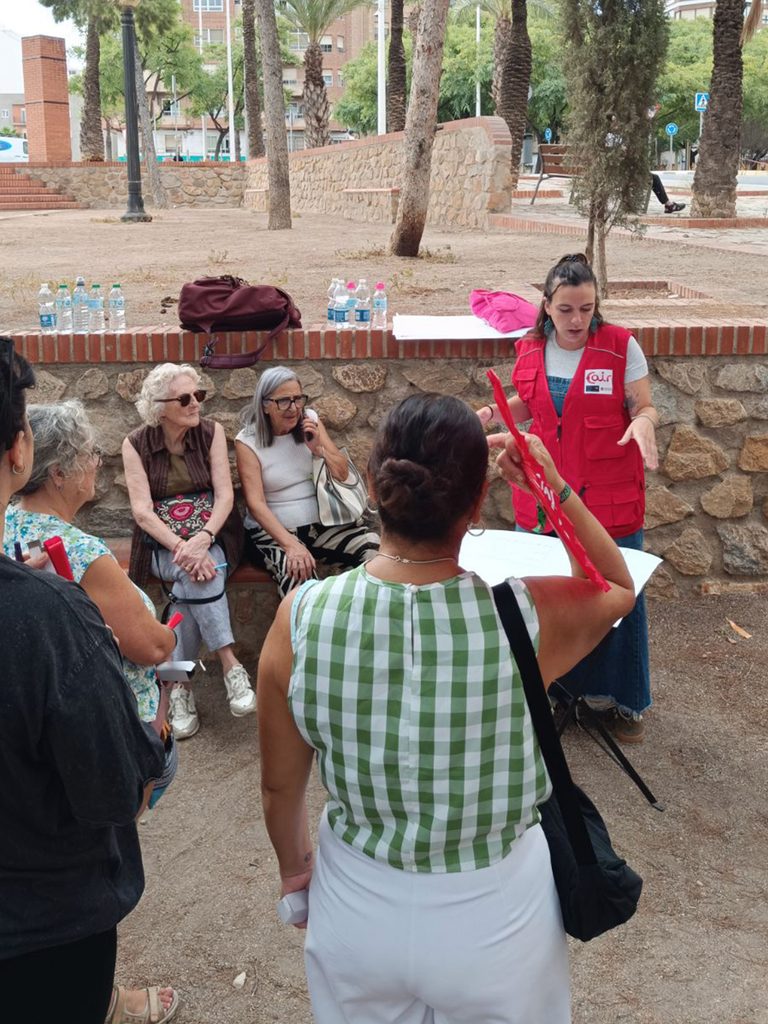
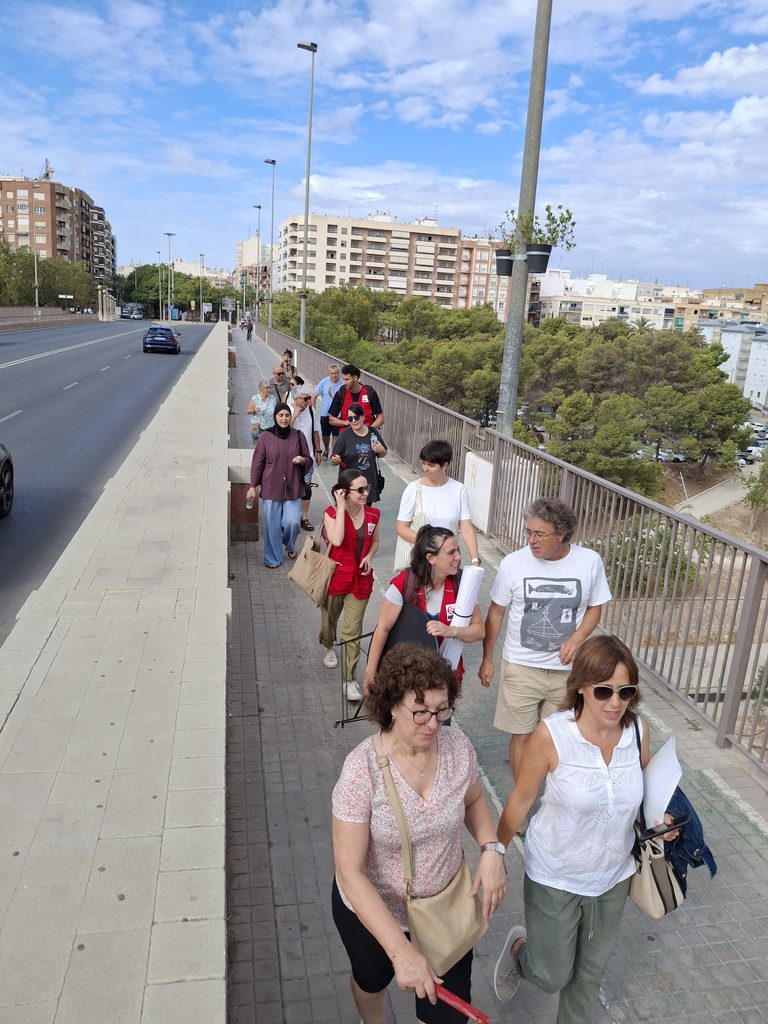
Knowing that our environment and daily life shape our well-being, we scheduled a different kind of workday for Tuesday, September 29th: a heart-healthy meeting alongside the project’s Steering Group (comprising local residents, associations, community groups, and public entities from the neighborhood).
Instead of meeting within four walls, we held a mobile meeting, outdoors and on foot.
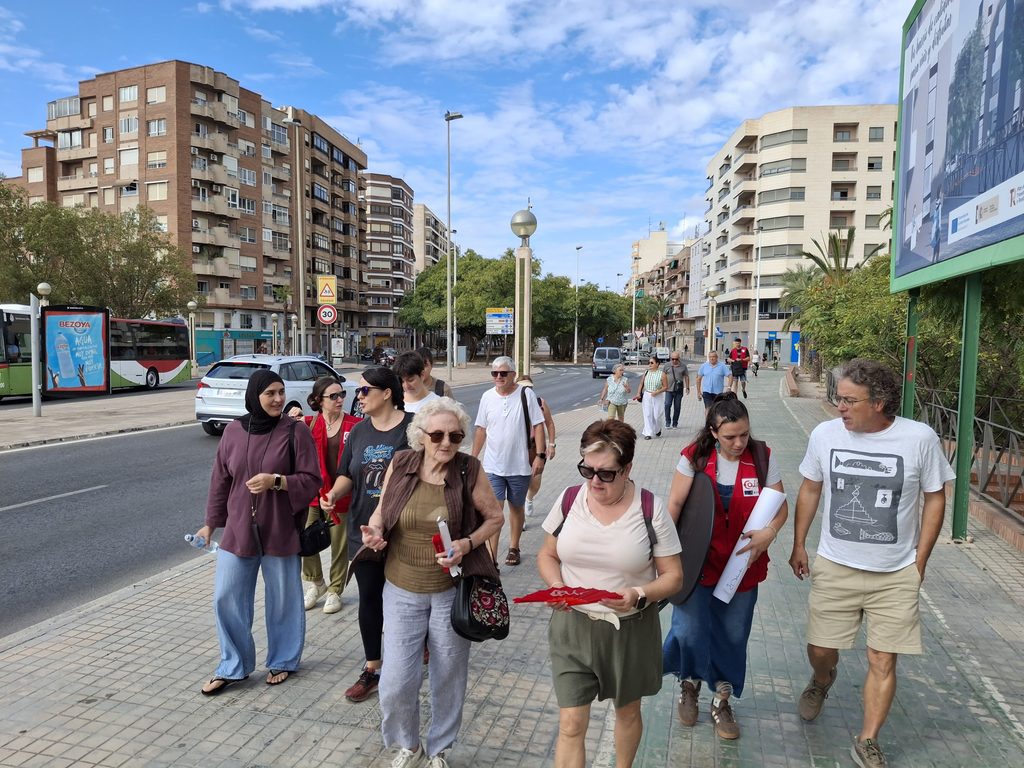
Why did we choose a walking meeting?
- It activates body and mind: moderate physical activity stimulates blood flow, creativity, and concentration.
- It breaks the sedentary routine: it demonstrates that work or community coordination meetings can also be healthy.
- It boosts community cohesion: walking side-by-side levels hierarchies and fosters fluid, participatory conversations.
We have resources in the neighborhood, let’s make the most of them!
Getting active doesn’t require a large financial outlay. During the participatory activities conducted by CAIR—such as the “well-being assets mapping”—the community identified that Carrús possesses public infrastructure ideally suited for staying active:
- Outdoor spaces and public squares: parks equipped with outdoor fitness circuits for exercising at any time.
- Community centers and sports clubs: an ongoing range of workshops, walking groups, and guided activities tailored to different age groups.
- Municipal sports facilities: accessible options for individual and team sports.
Combating a lack of awareness and overcoming barriers is a shared responsibility. For your heart, for your neighborhood: get moving!