
Community health extends far beyond hospital clinical care and dispensing medicines. Everyday environmental determinants—such as urban layout, local community networks, green spaces for recreation, and strong neighborhood roots—are crucial to the population’s overall well-being.
The CAIR Project develops within this holistic perspective. It is a research and community intervention initiative that places citizens at the heart of decisions concerning their own well-being, focusing its action on the iconic Elche neighbourhood of Carrús.
CAIR demonstrates that the most effective public health is conceived from the bottom up: listening, collaborating, and transforming the neighbourhood alongside its residents.
Citizen Science in action
Epidemiologists have traditionally adopted a detached perspective, with technical teams visiting neighbourhoods to collect impersonal surveys and process data behind closed doors. In contrast, the CAIR Project radically breaks with this top-down model, fully committing to citizen science.
In Carrús, residents are neither mere research subjects nor passive recipients of diagnoses; they are active co-researchers of their own reality. No one knows a community’s needs, strengths, and dynamics better than those who live in and walk its streets every day.
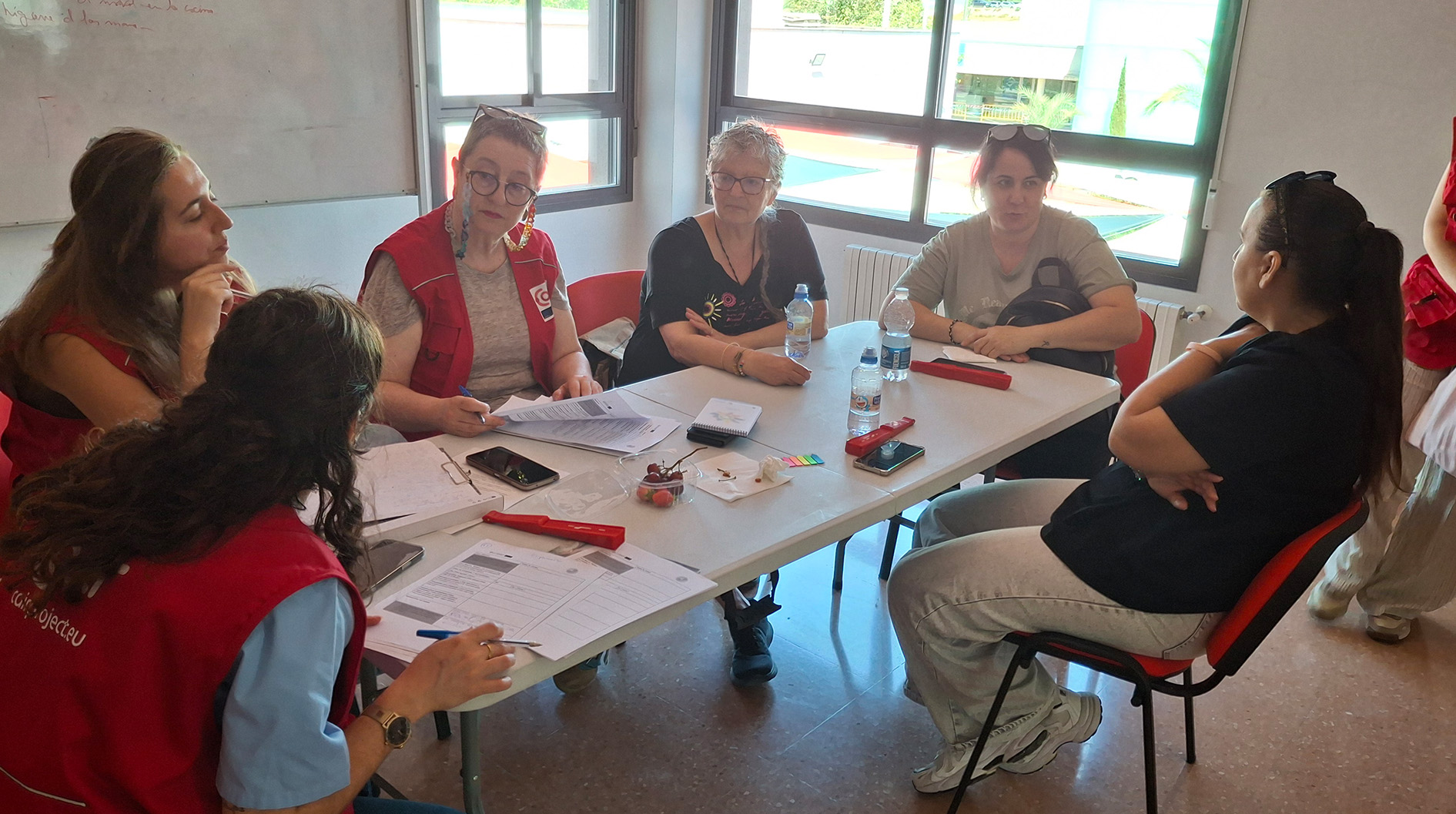
To build this contextual and relational assessment, the team did not rely solely on standard questionnaires. Instead, they engaged the social agents closest to the neighbourhood: primary care centres, residents’ associations, and, notably, community pharmacies.
Local pharmacies often serve as the first point of local health and social support. They operate not merely as collection points for medicines, but as trusted gathering spaces where residents chat, share concerns, and interact daily. By integrating pharmacies and neighbourhood groups into data collection and participatory processes, the project achieved a true snapshot of health in Carrús.
Initial assessment
Following the preliminary evaluation, the CAIR team organised a public feedback event within the neighbourhood to share initial findings with participating citizens.
Among the most striking conclusions was a strong sense of belonging: approximately 75% of surveyed residents (three out of four) reported feeling deep roots in and identification with Carrús.
This collective attachment forms a fundamental cornerstone for public health, as it sustains mutual support networks and fosters close-knit community life—elements that protect the physical and emotional well-being of the neighbourhood.
Regarding general self-perceived health, roughly 77% of the population rated their health as “good” or “excellent.” However, breaking down these figures revealed a recurring gender gap: men reported a higher positive perception of health than women, with a gap of around 10%. Although women statistically record greater longevity, they frequently live with a higher burden of chronic illness, unmanaged pain, and the strain of family caretaking duties or the structural inequalities of a patriarchal system, which directly impacts their daily quality of life.
Mapping the relational fabric: Sociograms
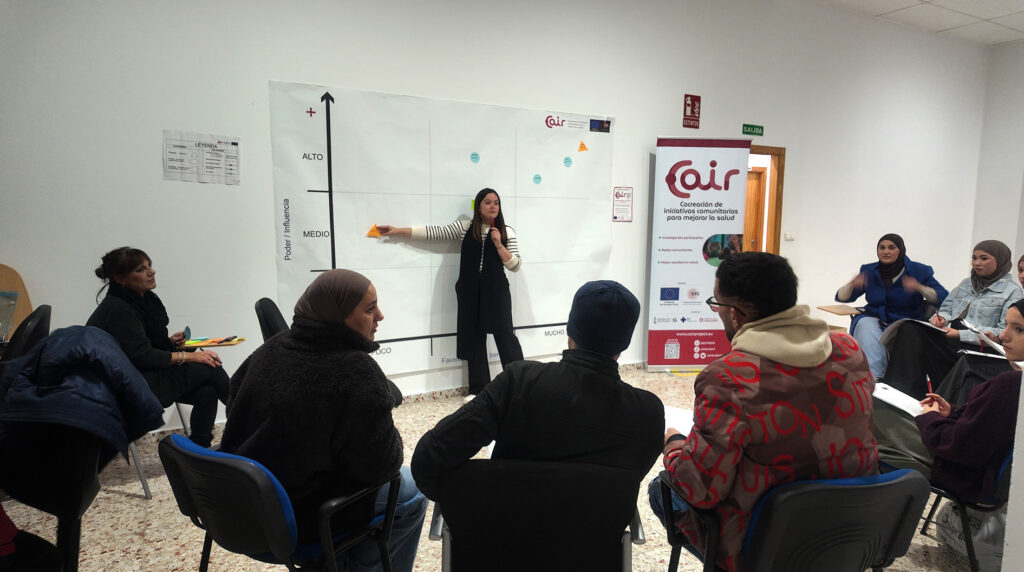
As a key component of the participatory methodologies, sociograms were used—a qualitative tool allowing participants (population groups and community professionals) to jointly map key local actors (institutions, associations, collectives, and individuals) and the neighbourhood’s relational network.
The results revealed a vibrant yet heterogeneous community network. From the perspective of different population groups, the findings underscored the importance of both family/community networks and local social centres (and their activities), which serve as main hubs for health and social support. Furthermore, the role of cultural representatives and mediators emerged as crucial for engaging specific groups within the area. On the other hand, this community overview highlighted opportunities to improve cross-sector coordination between public authorities, associations, and the community, emphasising the need to foster meeting spaces, fluid communication channels, and a stronger local network of associations.
Health assets
Another pillar of the project is identifying “health assets”—resources present in the environment that residents themselves recognize and value as useful for improving well-being.
The team walked through the neighbourhood asking residents about these health assets; the most highly valued were natural, social, and urban features. In an area characterised by high urban and population density, residents stressed the importance of squares, parks, and green spaces as key health determinants. Additionally, local shops and spaces where neighbours can meet, socialise, and support one another received strong appreciation from the community.
The challenge of participation
Despite residents’ deep roots in Carrús, when asked whether they had actively engaged in community initiatives to improve neighbourhood health over the past year, only a very low percentage responded affirmatively. Even more striking was the age breakdown: involvement came almost exclusively from people over 65, a group where participation reached nearly 20%. Conversely, among youth and working-age adults, community engagement was practically non-existent.
This contrast stems from both a heightened health awareness and concern among older adults, as well as the availability of free time in retirement compared to the work-life balance challenges faced by the working population. The main hurdle facing the project lies in designing strategies to engage and mobilize younger and middle-aged generations.
Next steps
With the assessment stage complete, the project enters a three-year community intervention phase. The core goal is moving from analysis to action: enhancing identified health assets, reducing health inequalities, and co-designing practical measures alongside residents.
A prime example of this union between neighbourhood, health, and grassroots sport will be the project’s active collaboration in the iconic Carrús Cross-Country Race, scheduled for October.
In summary, the CAIR Project illustrates the shift towards a collaborative, community-centred approach to public health. By placing research directly at the service of the neighbourhood and empowering citizens as drivers of change, it demonstrates that health goes beyond medical diagnoses: it is built collectively in the streets, squares, and shared spaces of the community.