

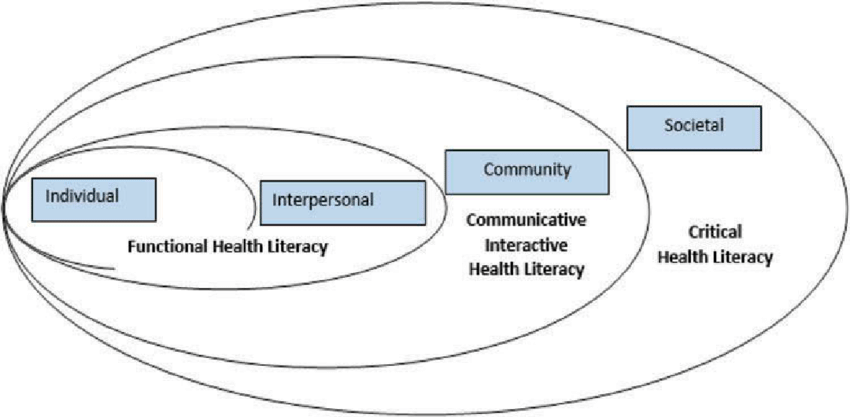
Health literacy is not just about reading a pamphlet or understanding a prescription, but rather a set of skills (cognitive, communicative, and social) that enable people to access, understand, evaluate, and use health information and services to make healthy decisions. The World Health Organization states that health literacy is both an individual aspect and the product of institutional structures regarding the availability of resources that facilitate access to and understanding of health-related information. Improving it requires responsibility and collective action on the part of authorities, professionals, the media, and civil society in general, who must provide reliable and understandable information.
Within health literacy is critical health literacy, defined as the ability to critically analyze health information and identify interests and social determinants to influence living conditions and collective decisions related to health. Critical literacy has emerged as a bridge between individual health education and community and political action: it enables people not only to understand health messages, but also to question simplistic or pseudoscientific narratives, recognize biases and commercial interests, and contribute to healthy changes in their daily lives.
Global overview
On a global scale, the COVID-19 pandemic and the growing “infodemic” have highlighted the urgency of critical health literacy. The rapid spread of misinformation about treatments, vaccines, and risks has increased the population’s need to filter information, evaluate sources, and make informed decisions. Furthermore, social inequalities continue to determine who has access to this resource: people with low educational levels, those living in poverty, migrants, and racialized individuals with language and digital barriers are exposed to greater misinformation and overmedicalization. Improving critical health literacy is, therefore, a strategy to reduce health inequities and make communities more resilient to health crises and ineffective health practices.
Europa: policies, challenges, and opportunities
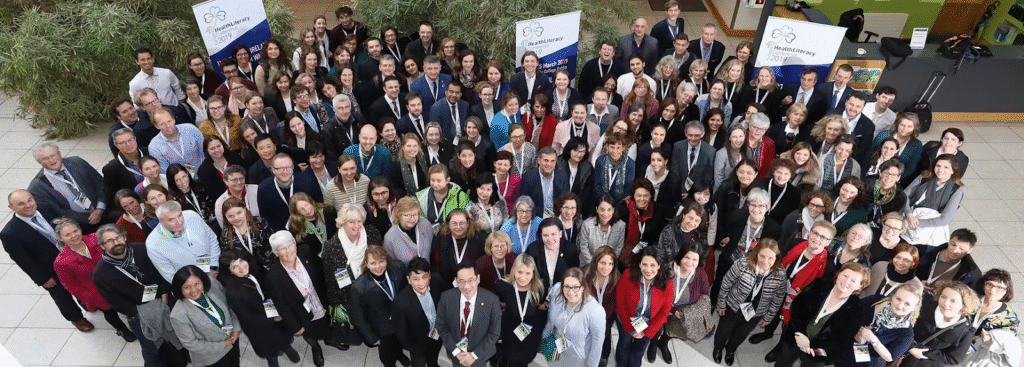
At the European level, the European Commission promotes projects that integrate critical health literacy into community interventions. Evidence indicates that the most effective ones combine actions targeting individual skills (education, media) with changes in environments and institutional communication, with clear messages that regulate false content. For example, studies exploring participatory and co-creation approaches to improve community health are being funded.
Spain: reality and domestic needs
In Spain, studies show variability in health literacy levels across population groups and a clear association between low literacy levels and poorer health outcomes. The National Health System and various regional governments have been incorporating health promotion and accessible communication programs, but challenges remain, such as how to transfer critical literacy to urban environments and more vulnerable neighborhoods or how to involve citizens in the design of community initiatives, among others. Experiences in participatory research and Spanish academic networks underscore the need to combine quantitative evaluation with qualitative and participatory processes to generate interventions tailored to each context.
CAIR: applied research on critical health literacy
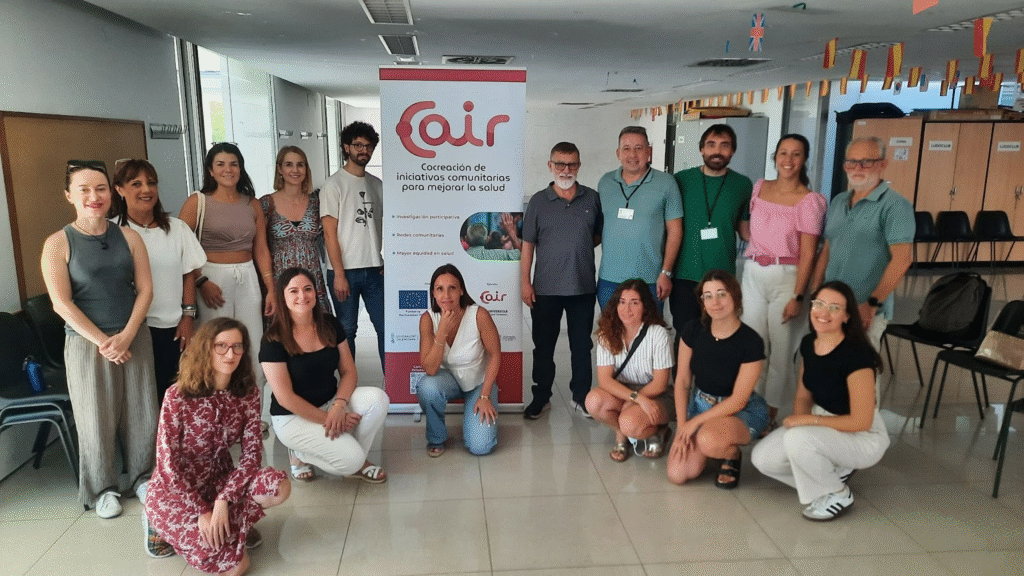
In this context, CAIR (Cocreating Actions to Improve Rationality in the Health System) emerged, a research project led by the Miguel Hernández University of Elche (UMH) and funded by the European Union’s European Research Council. With a Horizon 2024–2029, CAIR aims to demonstrate that co-creating community initiatives can alleviate the burden on primary care, reduce overmedicalization, and improve health equity. The project applies an intersectoral approach, integrating authorities, healthcare professionals, community organizations, and citizens in all phases: design, implementation, and evaluation.
CAIR focuses on the Carrús neighborhood of Elche, including the Carrús and San Fermín Health Centers, to promote collaborative actions with these neighborhoods on mental health, cardiovascular health, and antibiotic use. This approach allows interventions to be tailored to local realities, incorporates community knowledge, and evaluates potential improvements in community health. The project’s principal investigator, Lucy Anne Parker, and her team include experts in public health, communications, and community outreach to ensure that these actions respond to both scientific evidence and the real needs of the population.
Expected contributions and replicable lessons
CAIR will carry out participatory processes to promote critical health literacy. The goal is not only to improve critical understanding of health information, but also to transform environments and create real opportunities for participation in improving population health. Expected contributions include promoting the responsible and efficient use of healthcare resources, greater adherence to prevention strategies, reducing overmedicalization, and transferable methodologies to other European cities.
Conclusion
Critical health literacy and its promotion require evidence-based public policies, more responsible institutional communication, and, of course, key community participation. Projects like CAIR show a promising path. If we commit to promoting critical health literacy as a public policy and community practice, we will strengthen community resources for better-informed decision-making, as well as collective resilience in the face of crises and the rationality of the health system itself.
References